
China accounts for about 70 per cent of global rare earth mining and nearly 90 per cent of rare earth magnet production, making it a dominant player and giving it significant leverage in global supply chains.

The ministry stated that for vehicles designed for E10 and calibrated for E20, mileage may drop by just 1-2 per cent, while in other vehicles, it could be around 3-6 per cent.
Lower rates effectively increase disposable income, strengthen purchasing capacity, and support broader consumption growth.

'The reported deal between the European Union and China should mitigate it (shortage) for the medium to long term. Let's wait and watch how this plays out.'
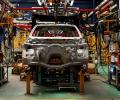
Indian auto component exporters may suffer a hit of 2,700 crore to 4,500 crore on their earnings after the imposition of steep US tariffs on key automotive parts, credit rating agency ICRA said in a note on Monday. The new 25 per cent tariff on engines, transmission, electrical components, and other auto parts may moderate the overall auto component industry's revenue growth to 6-8 per cent in 2025-26 (FY26), down from an earlier projection of 8-10 per cent.

India's decision to reserve its rights to impose retaliatory duties on the US over imposition of tariffs on auto parts is a procedural move under the WTO agreement on safeguards and it will not affect ongoing negotiations on the proposed trade pact between the two countries, an official said. India on Friday proposed imposing retaliatory duties under the WTO (World Trade Organisation) norms against the US over American tariffs on imports of the country's auto parts in the name of safeguard measures.
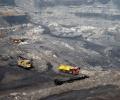
The 17 rare earth elements that are at the centre of the current crisis are critical components of everyday products -- from cars to jet engines to electronics like smartphones and flat-screen TVs.

Maruti Suzuki India (MSIL) said on Thursday its operations are unaffected by the global rare earth magnet shortage, but added that the situation is "uncertain and evolving". The firm said it is exploring multiple solutions to maintain continuity in operations and will notify stakeholders in case of material impact.

The automobile industry has sought government support in expediting approvals from the Chinese government for importing rare earth magnets used in various applications, including passenger cars. As per the industry sources, various domestic suppliers have already sought approval from the Chinese government through their local vendors in China.
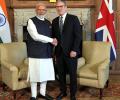
For UK automakers, market access to India will be limited by quantity caps and phased tariff cuts, especially on petrol, diesel and electric vehicles.

Fada estimates that global supply chain headwinds like scarce availability of rare earth elements for electric vehicle components and geopolitical tensions may affect urban consumer sentiment in June as well.
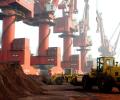
Since April 4, around 35 importers in India have either not received any shipment of the magnets or have not been granted the import licences by China.
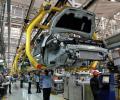
Auto parts exports from India may see a slight slowdown as US President Donald Trump's 25 per cent tariff could increase car prices for buyers by 8-25 per cent, thereby affecting demand, experts believe.

Passenger vehicle retail sales witnessed 3 per cent on-year decline in May with customers delaying purchases in several states due to India-Pakistan conflict and further softening of demand for entry-level models, dealers' body FADA said on Friday. The passenger vehicle registrations last month stood at 302,214 units, as compared to 311,908 units in May 2024.
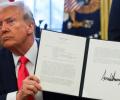
Industry insiders in India warn that any such move in the pharmaceutical sector could be counterproductive for the US as it may face increased drug shortages if tariffs are imposed on such imports.
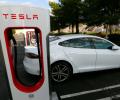
The US carmaker's entry into India is expected by the last quarter of the current financial year.

With nearly 100 launches and unveils, the Bharat Mobility Global Expo 2025, held in Delhi from January 17 to 22, made one thing clear to automobile enthusiasts: Electric vehicles (EVs) are the way ahead for the Indian auto market for years to come.

Elon Musk-led Tesla Inc is yet to express interest in India's flagship scheme to attract global investment in electric vehicle (EV) manufacturing, said Union Minister for Heavy Industries H D Kumaraswamy on Monday. In contrast, multiple global automobile giants -- such as Mercedes-Benz, koda Auto Volkswagen, Hyundai Motor, and Kia Motors -- are keen to participate, the minister noted.

'We don't have to compete with Maharashtra or Gujarat. We have to now start thinking about how we compete with the United States or China.'
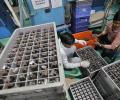
Auto component makers in India are bracing for a tough time. High absenteeism among workers owing to Covid-19, shortages of critical parts, and temporary closures of plants by automobile manufacturers have thrown a spanner in the works for the Rs 3.2-trillion sector, which derives 60 per cent of its revenues from automobile original equipment manufacturers (OEMs), with the balance split equally between replacement demand and exports. Car market leader Maruti Suzuki India on Saturday said it was extending the maintenance shutdown, which was from May 1 to 9, till May 16, "keeping in view the current pandemic situation". Some activities will continue in the plants.
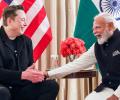
Starlink's application for offering satcom services in India had been held up for the company's inability to comply with mandatory ownership disclosure norms.

The production linked incentive scheme (PLI) for automobile and auto components has so far attracted a proposed investment of Rs 67,690 crore, said Economic Survey 2023-24 tabled in Parliament on Monday. A capital of Rs 14,043 crore has been invested till end-March 2024, it stated. Applicants have proposed employment generation of 1.48 lakh, against which 28,884 of jobs have been generated till March 31, 2024, the Economic Surevy 2023-24 stated.
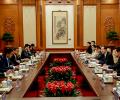
'We remain in touch with the Chinese side, in Beijing as well as in Delhi, to bring predictability in the supply chain.'
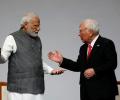
Osamu Suzuki, the man who took a risk and bet on India when no one else believed in having a viable automobile company in the country, has died at the age of 94, according to information shared by Japan's Suzuki Motor Corporation on Friday.


The auto component industry caters to automobile industry through a whole gamut of auto parts such as engine parts, body & chassis, electrical parts, drive transmission & steering parts, braking, suspension etc.

Invest in these funds through the SIP route with at least a seven-year horizon.
Companies, which are jumping into the bandwagon, include MNCs. For instance, the world's leading component company Bosch has committed an investment of Rs 2,650 crore (Rs 26.50 billion) through four subsidiaries in India. Funds will be used to set up manufacturing facilities for gasoline systems, electronic control units and ABS systems.

Traversing from being just vehicle manufacturers to mobility solutions providers amid a raging debate over which eco-friendly technology must be incentivised, the Indian automobile industry is driving in the new year under the shadow of a slowdown in sales with the post-pandemic pent-up demand in distant memory. The shift in the auto industry -- where advanced technologies like autonomous driving, vehicle intelligence, connected features and electrification are quickly gaining traction -- will be reflected in the upcoming Bharat Mobility Global Expo in which India's flagship Auto Expo has been clubbed to be held from January 17-22, 2025 in Delhi-NCR.

The Budget has given signals that India is sensitive to the US needs and willing to walk the extra mile, but if need be, we should respond in equal measure as a sovereign nation, notes Ajay Srivastava.

After Chennai, it is Coimbatore, Madurai, and Tiruchirappalli, that are emerging as manufacturing hubs. Coimbatore is India's top Tier-II city in terms of the number of GCCs, according to a report by Cushman & Wakefield.
The sweeping tariffs proposed across sectors by US President Donald Trump are scheduled to be imposed starting April 2, with most analysts worried about their impact on companies, and in turn the financial markets. Recently, the US administration signaled that it will impose sectoral tariffs on energy, pharmaceuticals, semiconductors, agriculture, copper, and lumber.

Goods from sectors, including agriculture, precious stones, chemicals, pharma, medical devices, electricals, and machinery may get impacted if the US will go ahead with imposing reciprocal tariffs on Indian products, according to experts. They said that these sectors could face additional customs duties from the Trump administration because of the high tariff differential or gap, which is the difference between the import duties imposed by the US and India on a product.

The commerce ministry is working on different scenarios to assess the possible fallout of reciprocal tariffs to be imposed by the US administration on April 2 on its key trading partners including India, sources said. US President Donald Trump has said that April 2 will be 'Liberation Day' as he plans to announce tariffs or import duties to bring down America's trade deficit, and promote the country's manufacturing.
That is not out of choice, but because of the new European Union norms for automobile recycling, which comes into effect in 2010, and prescribes that once a vehicle is destined for the scrap heap in the EU territory, 80-85 per cent of its parts ought to be recyclable or reusable. That means every component -- batteries, airbags, catalytic converters, and auto plastics -- have to be safely disposed.

Overall, volume growth is likely to be in the range of 3-8 per cent for two-wheelers and 5-7 per cent for passenger vehicles owing to healthy demand from urban and rural areas and pending order books.

More than 40 new product launches are expected at the upcoming Auto Expo which will be held under the umbrella of Bharat Mobility Global Expo 2025 from January 17-22, a government official said on Tuesday. With visas continuing to be an issue, large scale participation of Chinese companies are unlikely although some of them are participating at the expo, Joint Secretary at Ministry of Commerce and Industry Vimal Anand said at the sidelines of curtain raiser of 'Bharat Battery Show' which will also be a part of the Bharat Mobility Global Expo 2025.
Exporters on Thursday sought a fund of Rs 750 crore for three years to tap USD 25 billion export potential in the US, aiming to seize potential opportunities that may arise as the US President-elect, Donald Trump, has threatened to impose high tariffs on Chinese goods. In its pre-Budget meeting with the finance ministry, Federation of Indian Export Organisations (FIEO) President Ashwani Kumar has also demanded extension of the five per cent Interest Equalisation Scheme (IES).
The Ministry of Heavy Industries on Monday announced the extension of the Production Linked Incentive (PLI) Scheme for Automobile and Auto Components by one year with "partial amendments". This decision has been made after receiving the approval of the Empowered Group of Secretaries (EGoS). "In pursuance of the approval of EGoS, the Ministry of Heavy Industries has made partial amendments in the Production Linked Incentive (PLI) Scheme for the Automobile and Auto Component Industry and Guidelines of the Scheme.
